Controlling Behavior in Relationships and Brushing your Teeth Daily
Improving Your Controlling Behavior in a Relationship
Fionna decided to take a look into exactly what controlling behavior looks like in a partner. Often she would find herself thinking…if my partner would just be more romantic, considerate, etc, everything would be fine. Does that sound familiar? You may want to read on…
“Instead of taking responsibility for their own happiness, which would be empowering, codependents’ focus is external. Rather than attend to their needs directly, they try to exercise power over others and control others to make themselves feel okay on the inside. They think, ‘I’ll change him (or her) to do what I want, and then I’ll be happy.’ This behavior is based on the erroneous belief that we can change others.”
Darlene Lancer
The reason:
We try to control others into meeting our own needs. This turns into a Hallmark of codependency. Basically, you can choose intimacy, or control, you just can’t have both. It is important to give up unnecessary control of things your partner does: how they drive, what they wear, what they do at work, how to load the dishes, etc. When you let go of control over these simple things, it helps you gain power in your life. Doing all the work is exhausting! Relaxing and enjoying while your partner helps is a better place to be in.
Controlling behaviors occur when you do for other what they should do for themselves. Some example of this include:
- Maintaining physical health
- Sticking to routines
- Staying in touch with family and friends
- Financial responsibility for purchases
- Helping other avoid the negative consequences of their behaviors
Examples of Controlling Behaviors
- You try to dictate what your partner does and when.
- Or you interfere with their friendships or other relationships.
- You seem to be isolating them from other people (sometimes unintentionally.)
- What’s more, you seem to want them with you at all times and don’t understand or respect their need for alone time.
- You’re often quick to criticise and always want your partner to meet your standards.
- You make acceptance / love / care / attraction conditional.
- Sometimes you may guilt-trip your partner to get what you want.
- You can also get angry or overreact when you don’t get what you want… which often results in arguments.
- You might cross the line by invading their privacy – spying or snooping.
- Likewise, you make plans for the two of you without even consulting them.
- You’re always the default decision maker and definitely say you ‘wear the trousers’ in the relationship.
- You don’t like to compromise and aren’t willing to meet in the middle. In fact, you don’t ever really listen to their point of view.
- You try to dictate your partner’s future to match your own desires. (Are you seeing them for who they really are or who you want them to be?)
- You always want to know where they are and what they’re doing and need constant disclosure.
- Similarly, you want them to focus on you instead of others, and take it personally when they’re not.
- Your worrying is excessive. You worry a lot when they’re doing things without you or making decisions without you.
- And again, you then ask an excessive amount of questions.
- You use a scorecard or hold things against them to give yourself more power. They’ll often have to ‘earn’ trust or other good treatment.
- You make them feel beholden to you because you give them all you can. It’s almost like they owe you something, are unworthy or don’t quite ‘measure up.’
- You often feel jealous, throw around accusations or get paranoid.
Ok… take a deep breath. This is a hard realization: Just because you’ve been acting in ways you’re not proud of, doesn’t mean you’re a bad person. It is a lot more common than you think. Think about all of those Tik Tok videos where people are making fun of these controlling behaviors.
So why do we want to control our partner?
- Recognizing why we try to control others is a big step to change. One big reason is usually low self-esteem and losing your partner. You tend to want to hold on to them tighter to make sure that you don’t lose them. You have got to listen to this episode… because right about here is when Fionna mentions… her hamster and you want to hear that story.
- Another reason may be certainty and safety.
- You might also be trying to control others to fall into predictable patterns and behaviours, so that there are no unexpected surprises or deviations from what you expect.
- Maybe you are trying to avoid any issues or conflict so you become overly controlling.
- You may have been hurt before when you trusted someone and they let you down. This can be from lying, cheating, or going behind your back. If you are worried it will happen again, you may become overly controlling.
- If someone has been controlled by someone else in their past or is being controlled by someone else now – sometimes they then overcompensate, to try to regain control back into their life. But, it comes at the cost of developing a healthy, meaningful relationship with their partner. Think about this: controlling behavior can lead to negative behavior in your partner, rebel against you, tempted to do what you dislike out of anger.
- Hard upbringing, developed controlling tendencies and anxiety about maintaining their life. A child that grows up in this situation may try to fill the gaps left by parents that couldn’t fulfill their role well.
Steps to Improve your Controlling Behavior
- Write a list of your habits
- What do you do that seems controlling?
- Discuss it with your partner
- Recognize how you feel in that moment
- When you are putting unreasonable demands on your partner, think about what you are thinking.
- Change your reaction
- What can you do instead?
- Issue: constant texting when partner is out and become angry if they don’t respond
- Plan: Create new habits to do when these things occur
- Write all worry out in a diary
- Try to write it out to process it
- Anger management techniques
- Anxiety as well
- What can you do instead?
- Find things to help you – distraction
- Plan a later date, go out with friends/family, keep the phone out of reach, etc.
- Work on building yourself up
- Find helpful books, therapist, coach, etc. (or our podcast…)
Remember… Relationships are amazing but they are not everything. You ARE STILL YOUR OWN PERSON AND SHOULD LIVE YOUR LIFE. You need to know that you will be ok without them.
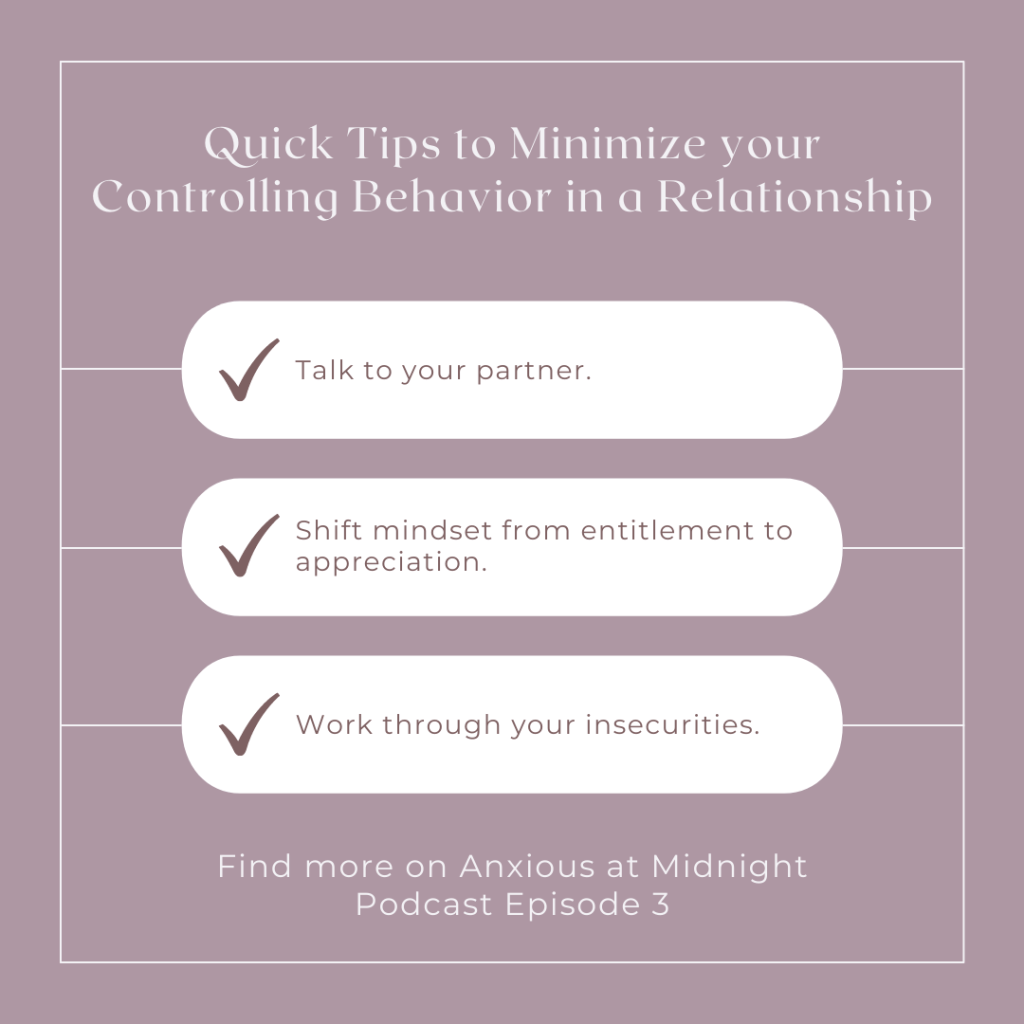
Tips to Work Through the Behavior
- Talk to partner:
- Work as a team, communication is key, support.
- Try to put yourself in their shoes
- Mindset shift from entitlement to appreciation
- Think about your partner and how lucky you are to have them
- How important this relationship is
- Focus on what you can give, not what you are getting
- Be the best partner you can be because you love them, you want them to be happy.
- Don’t sabotage yourself by being excessively demanding.
- You will get more back if they are happy too, significantly changing the interactions.
- Remove negative thoughts
- Stop assuming the worst is going to happen
- Work through insecurities
- Usually caused because of our insecurities, we need to learn to value ourselves
- Let your guard down
- Constantly worrying about the thing you don’t want to happen does not keep it from happening.
- Learn to trust your partners decisions
- Do not think that your partner is not capable of making good decisions
- Remind yourself of why you chose to be with this person
- Accept that there are things beyond your control
- Turn demands into questions
- Look at how you are communicating
- Questions are a great way to remove demands
- How you communicate will help your partner as well.
- Open your mind
- Take things as they come
- It does not have to be your way or the highway
- Compromise, if you can’t maybe this is not the right partner
- It will still be ok if it doesn’t end up the way you thought.
- Healthy balance in relationship
- Encourage your partner to do things without you and make sure you’re doing things too.
- Space to move and breathe will bring you closer.
- Understand that it’s ok you’re different
- You two are not the same person – respect differences
- Life through your eyes will be different
- We all have our own thoughts, opinions, beliefs etc.
- Avoid manipulation and threats to get what you want
- Very toxic behavior: bribes, or setting up situations exactly how you want
- Refocus on your own needs, desires and passions
- Meet your own needs
- Pursue your own passions
- Make a list of things you cannot control and then find a way to spend that energy
- Learn to say no
Dental Hygiene
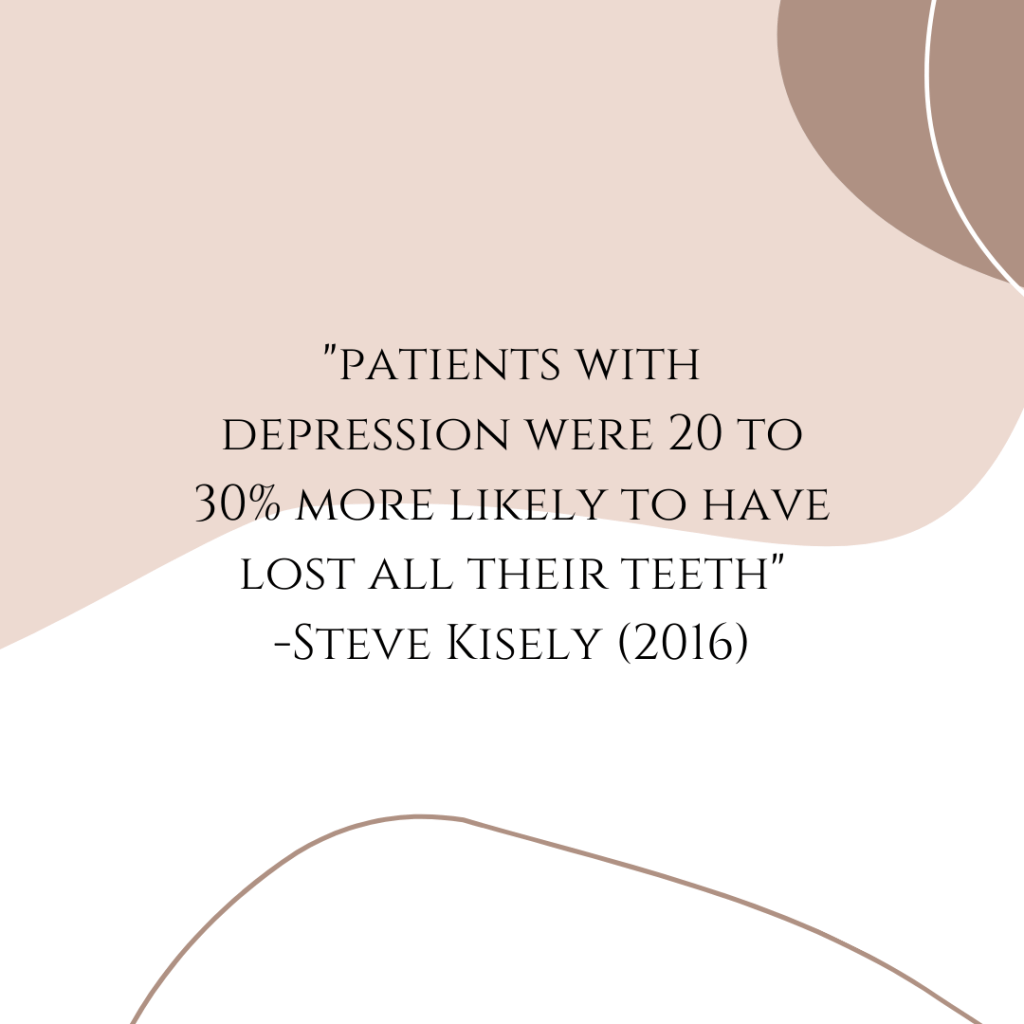
If you struggle with your mental health, it is very likely that you also struggle with your dental health. After joining several communities which focus around mental health, I learned that I was a part of the majority who struggled with their dental hygiene.
I always felt so embarrassed because there were days I did not have enough energy to brush my teeth. Just enough to throw on a dress and walk out the door. We have all been there and you should not feel bad.
I am here to share some insights on the impact of poor dental hygiene and how to incorporate some dental hygiene into your life.
Benefits of Brushing Your Teeth
Brushing teeth will remove food and plaque which carry bacteria which can produce acid and attack your teeth enamel. Cavities will result in the breakdown of your enamel and plaque can become tartar which can build up under your gums and lead to gum disease which can snowball into severe bone infection in the teeth and cause tooth loss.
How to Brush
Brush two times a day for 2 minutes and floss once a day. It is recommended that you go for a dental appointment every 3-6 months. Replace your toothbrush every 3-4 months. Refrain from tobacco use and brushing your teeth after eating acidic food.
Tips
- Set a reminder on your phone
- Make a smile diary
- Bookend your day
- Put money where your mouth is
- Do it as a family
- Keep a brush in your purse or office
- Consider the gravity of a cavity (pain, money, time, etc.)
- Find fun ways to brush teeth (flavor, electronic toothbrushes, kid’s brush, etc)
Tips for Those Really Struggling
If you can’t brush your teeth to the full extent yet. That is okay. Here are some hacks to start:
- Disposable Brushes
- Baby Wipes
- Chewable Toothpaste Tablets
- Keep toothbrush in shower
- Habit Tracker/Dry Erase Board
- Floss Picks
- Mouth Wash
- Brush for Less Time
- Keep in Multiple Locations
- Waterpik Machine
- Reward Yourself
- Products with Xylitol
- Drink tons of water
Disclaimer
This podcast includes explicit content, we discuss triggering material and are not mental health professionals. If you need immediate help please call the suicide hotline at 800-273-8255.
- Episode 8: It’s an Empty Chair
- Episode 7: As soon as this is over, it’s on.
- Episode 6: Low Pain Tolerance
- Episode 5: A Savage Bitch
- Episode 4: Small Enough?
Sources
https://www.forgettingfairytales.com/how-to-stop-being-so-controlling-in-a-relationship/
https://inspiringtips.com/ways-to-stop-being-controlling-in-a-relationship/
https://lauradoyle.org/blog/how-to-stop-being-controlling-in-a-relationship/
https://www.mouthhealthy.org/en/az-topics/b/brushing-your-teeth
https://www.healthline.com/health/when-you-dont-brush-your-teeth#timeline
https://www.hello-products.com/friendly-blog/8-tips-to-make-brushing-your-teeth-a-habit/
 Anxious at Midnight Podcast