Emotional Incest and the Work-Life Balance
Emotional Incest
I think we all shiver at the would of incest. We cannot wrap our brains around it. However, we may find that we actually engage in incest without being aware. Emotional incest can be just as damaging as sexual incest. Usually the results on a child’s mental health are similarly damaging, but to a lesser degree. Emotional incest is an unhealthy emotional attachment that blurs boundaries in a way that is psychologically inappropriate. This occurs when a parent treats their child like a partner, depending on them for emotional support. This can result in a child’s inability to maintain appropriate boundaries, develop an eating disorder, begin to self harm, have relationship dissatisfaction, sexual intimacy issues, and substance abuse. Unfortunately, these issues are not immediately apparent and will usually start to manifest in adulthood.
Examples of Emotional Incest:
- Asking your child for advice about adult issues. This can include spousal difficulties, sexual feelings, problems not directly involved with the child, basically topics that are a better fit for speaking to an adult about.
- Inviting children into the problems of adult relationships can definitely blur boundaries. A parent should not have to rely on children to help them through their turmoil. When an adult asks a child for advice, they are subtly positioning the children in this role of responsibility.
- Parents can encourage or lead the child to consistently praise their effort or personality. This can occur either privately or in public. This is when the parents’ need to feel important takes over the spotlight by showing the child’s adoration for the parent. This forces the child’s visibility to the shadows making the parents esteem or narcissism the most important.
- Parents often will be best friends with their child, and this also blurs the boundaries. This leads to difficulties with discipline, expectations and personal responsibility. Additionally, when a child is put in the role of a confidante when they are not capable or ready to handle adult relationships. The child is forced to set aside their social and psychological world for the parents sake.
- Putting the child in a role of therapist who navigates through the emotional crisis robs them of their own relationships and learning age appropriate socialization. The child may find themselves taking care of others’ emotional needs rather than their own. This will lead to an adult child having difficulty maintaining a romantic relationship because their need for crisis overrules the need for solidity.
- Putting a child in the middle of arguments during separation or divorce absolutely can be emotional incest.
- The parent feels jealous when the child develops relationships with others. This can cause the child to feel guilty about external relationships and avoid building friendships or romantic relationships.
When Emotional Incest Ocurs:
This often occurs when the parent is lonely, such as divorced or having marriage difficulty, there may be a broken family dynamic where infidelity, mental health conditions or addictions are present. This is a difficult concept to pinpoint and thus is often not reported. A child can actually enjoy some of the feelings because they feel important or special for being chosen as the confidante. Often feeling more mature, helpful or even powerful.
It is important to keep in mind that a child is neglected when this occurs. The child is likely not given the discipline, structure or guidance as a child. There are imperative skills to learn to use in adulthood.
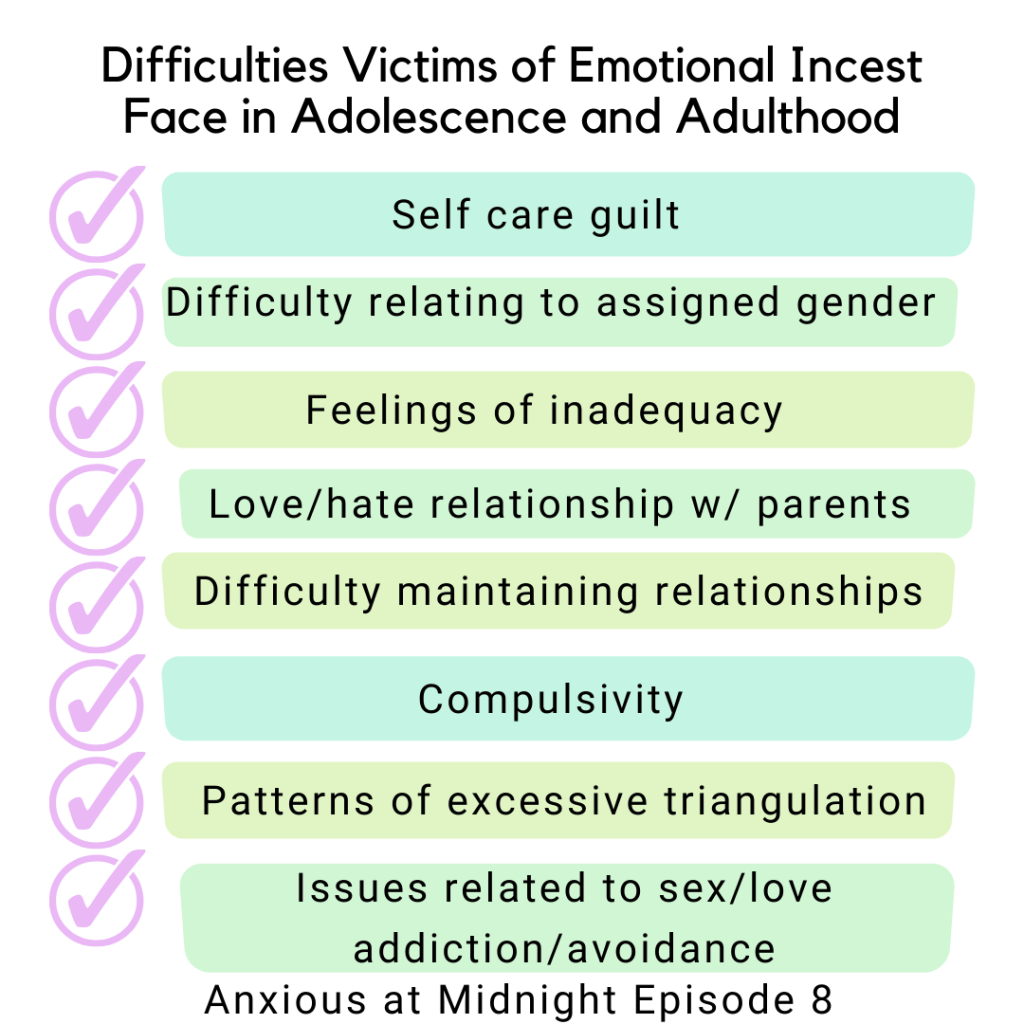
Through adolescence and adulthood, the individual can face the following difficulties:
- Guilty about practicing self care, especially an unrealistic sense of obligation to that parent
- Difficulties relating to sexual identity or gender
- Feelings of inadequacy
- Love/hate relationship with their parents
- Difficulty maintaining relationship due to abuse individuals idealization and devaluation of others and an inappropriate expectations placed on their partners
- Compulsivity that may include sex, substances, alcohol, work and food
- Patterns of excessive triangulation (such as indirect communication) in work, family or romantic relationships
- Issues related to sex addiction, avoidance or love addiction/avoidance.
There are also effect on the family as a whole there are five models:
- The invasive parent who is enmeshed with a child who is supposed to meet their needs not being met in an adult relationship.
- The chosen child is the enmeshed child and often treated as all good and favored, their needs to develop as an individual, make mistakes and learn, receive structure and discipline are neglected. These children can often be scapegoats. Where the children are not only used for emotional support but for the release of anger and tension as well.
- The left out spouse is the spouse of the invasive parent that is shut out of the exclusive parent child bond, this may turn into a workaholism, alcohol, affairs or other unhealthy coping mechanisms.
- The left out children are the non favored children who may be neglected or receive less of the family’s resources and often bond with the left out spouse.
- The spouse of the chosen child will later grow up and marry and their spouse may find themselves in a disturbing triangle.
Healing:
- Therapist who specializes in childhood abuse, enmeshment or codependency.
- Self help meeting where an individual can gain an understanding that they are a survivor of emotional incest. These meetings will usually follow the 12-step model which is especially helpful.
- Journaling is particularly helpful because writing about the issues helps an individual process their thoughts.
- Psychoeducation is highly important because an individual who educates themselves and increases their understanding. Increasing their understanding can help an individual heal.
- One article suggested an intensive out-patient program where they specialize in emotional incest recovery.
- Identify family of origin and particular family dynamics involved
- Recognize any patterns of emotional incest between caregivers and abused individual
- Learn to set boundaries with that parent. In the case of a deceased caregiver work with a therapist who can help facilitate empty chair work or another experientially based modality for grief and loss
- Acknowledge any feelings of abandonment as a result of the emotional incest
- Work toward individuation and separation by learning to reparent the self (Inner child work)
The Work-Life Balance
My whole life it seems like I was always doing too much of one thing and not enough of another thing. Last year it was not managing my mental and physical health and only working on my school work. This summer it has been working on all my neglected hobbies and avoiding job applications.
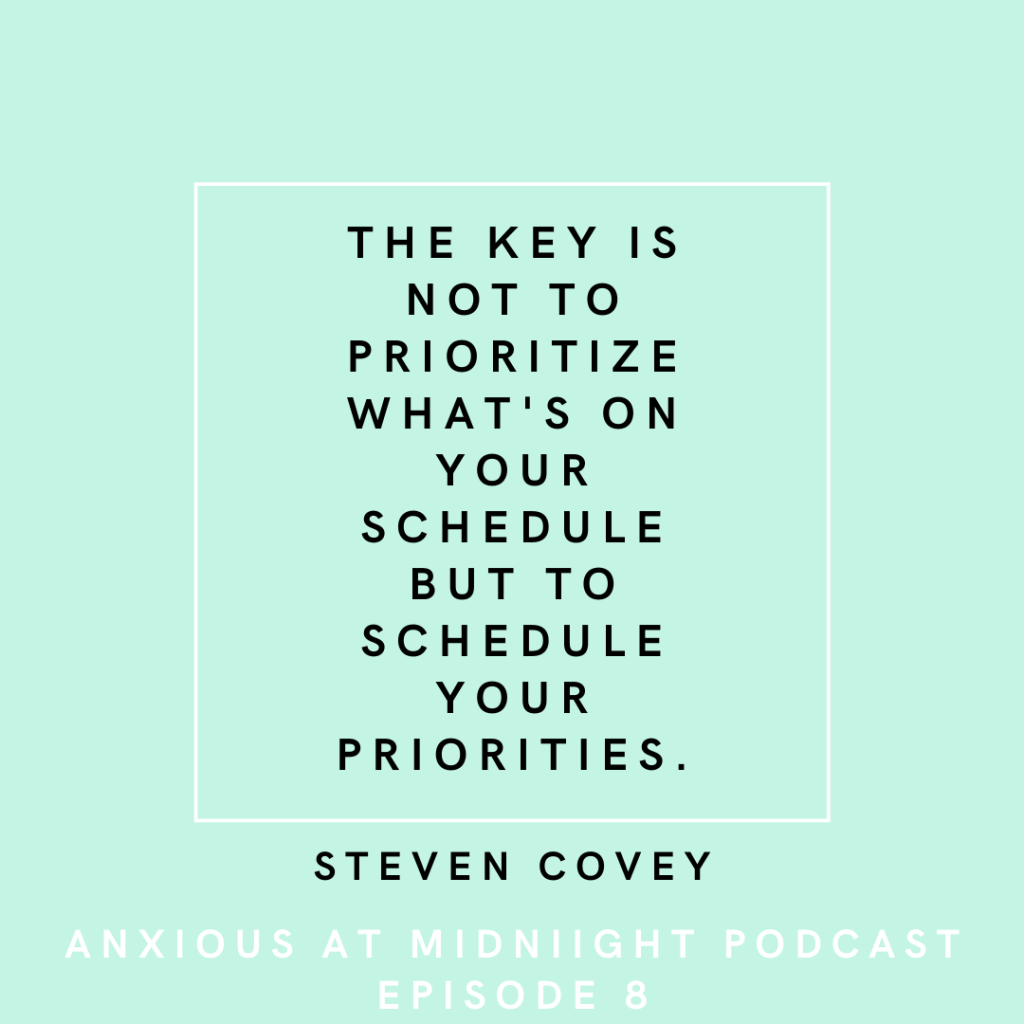
I think we all get carried away with one thing or another and we let our priorities go. But the consequences can be detrimental if we do not find the perfect work-life balance. If you think you are spending too much time in one area of your life, ask yourself these questions:
- Are you working too much?
- You feel guilty turning off phones when not at work
- Coworkers are upset that you do not answer their messages right away
- You say “my job is killing me”
- Are you studying too much?
- Not sleeping well
- Not eating right
- Classmates are the only people you see
- You stop responding to messages
- Not retaining information
- Are you cleaning too much?
- You are late because of your cleaning habits
- You are infringing on other people’s lives
- Are you spending too much time with your partner?
- Friend throwing shade
- You don’t like the way your partner breathes
- Falling behind
- You don’t know what to do when they aren’t around
- Bored in relationship
- Resent your partner
- Are you spending too much time with your hobbies?
- It hurts your finances
- Affects sleep, work, home, relationships
If you answered yes to any of the questions above, here are some tips and tricks:
- If you are working too much
- Turn off notifications for work
- Speak with coworkers about not messaging after certain hours
- Also, try using an app like RescueTime, which clocks your daily habits, analyzes your productivity, and alerts you when you spend too much time on an activity
- Possible career move
- Get hobbies
- If it sounds like you are studying too much
- Schedule a study schedule
- Make time for hobbies
- Make time for meals
- Make time for friends
- If you are cleaning too much
- Allow only an hour of cleaning a day
- Let the small details go
- If you spend too much time with your partner
- Create me time
- Get out of the house
- If you spend too much time with hobbies?
- Set a hobby budget
Overall tips
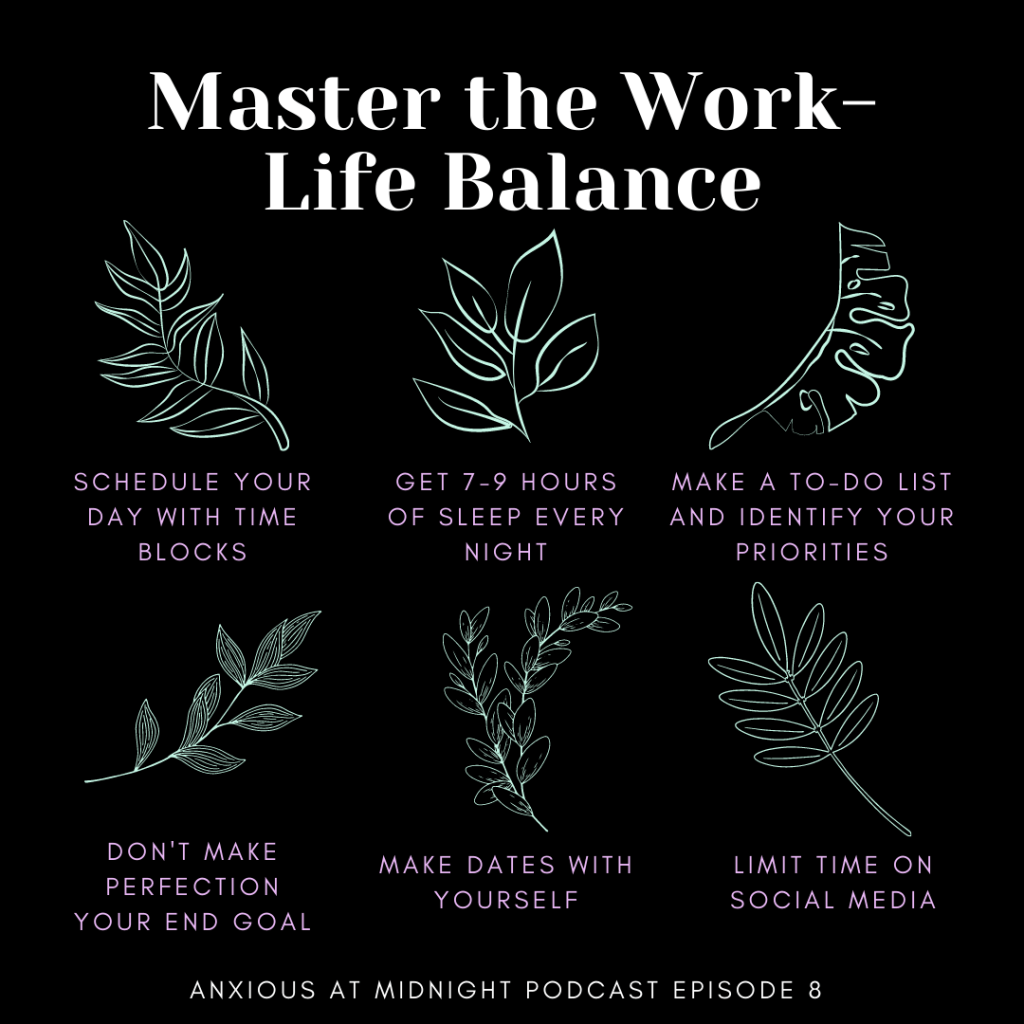
- Set a schedule
- Schedule time blocks
- Get your priorities right
- Set limits (work, hobbies, chores)
- Sleep
- Make a list
- Take a break
- Limit time on social media
- Don’t make perfection your end goal
- Learn something new
- Avoid going crazy
- Make dates with friends, family
- Make dates with yourself
- Examine your life regularly
Disclaimer
This podcast includes explicit content, we discuss triggering material and are not mental health professionals. If you need immediate help please call the suicide hotline at 800-273-8255.
- Episode 8: It’s an Empty Chair
- Episode 7: As soon as this is over, it’s on.
- Episode 6: Low Pain Tolerance
- Episode 5: A Savage Bitch
- Episode 4: Small Enough?
Sources
https://psychcentral.com/blog/emotional-incest-when-is-close-too-close#4
https://www.bpdfamily.com/content/was-part-your-childhood-deprived-emotional-incest
https://fherehab.com/learning/emotional-incest-what-is-it
https://www.fuzia.com/blog/details/8-ways-to-balance-work-and-personal-hobby
https://www.dailyinfographic.com/the-consequences-of-spending-too-much-time-at-work
https://zenhabits.net/how-to-find-that-elusive-balance-between-work-and-life/
https://blog.studentlifenetwork.com/2019/05/27/hobbies-balancing-work-life/
https://www.academiccourses.com/article/Five-Signs-That-You%E2%80%99re-Studying-Too-Much/
https://www.chegg.com/play/life-hacks/23-signs-youve-been-studying-too-much-and-need-a-break/
https://moneyning.com/budgeting/are-you-spending-too-much-on-your-hobbies/
 Anxious at Midnight Podcast