Highly Sensitive Personality and Sitting Down and Getting it Done
Highly Sensitive Person
Fionna tends to react as a 30 on a scale of one to ten for certain things. She has wondered why she has such a large reaction. We’re talking about her husband eating a cookie she saved for herself and she is ready for a divorce. Through the research, Fionna was able to identify that she is a highly sensitive person.
People who are highly sensitive have increased and deeper central nervous system sensitivity to physical, emotional or social stimuli. This is also known as sensory processing sensitivity. This is a fucking personality trait. Which results in increased responsiveness to positive and negative influences. Concept began in the mid 1990s with psychologists Elaine Aron and Arthur Aron. They created a personality questionnaire to help people identify themselves, it is called the Arons Highly Sensitive Persons scale. About 20% of the population have this personality trait. A highly sensitive person shares similarities with introversion but it is not the exact same.
The following are signs that you may be a highly sensitive person:
- People tell you’re too sensitive, shouldn’t think so much, etc.
- People strike you as too insensitive
- You may:
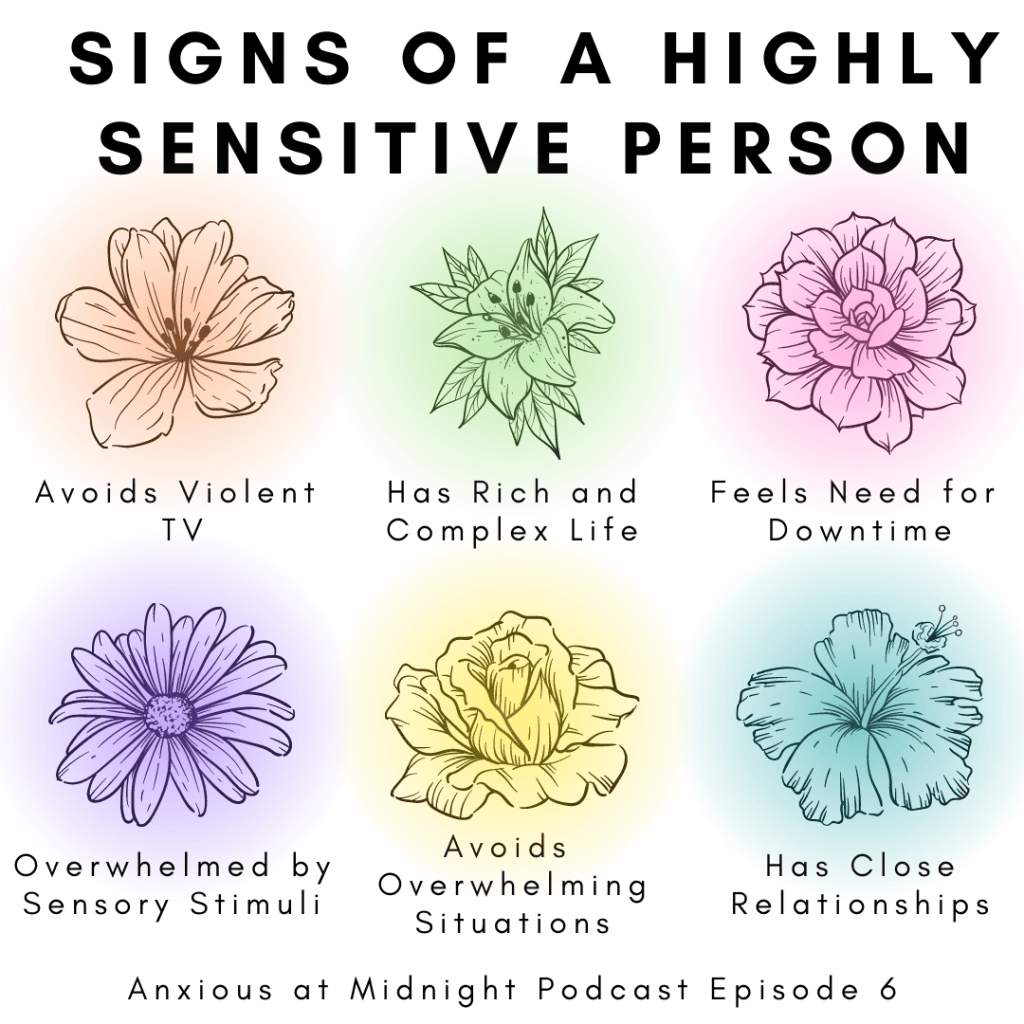
- Avoiding violent movies or TV shows because they feel too intense and leave you feeling unsettled
- Being deeply moved by beauty, either expressed in art, nature, or the human spirit, or sometimes even a good commercial
- Being overwhelmed by sensory stimuli like noisy crowds, bright lights, or uncomfortable clothing
- Feeling a need for downtime (not just a preference), especially when you have hectic days; needing to retreat to a dark, quiet room
- Having a rich and complex inner life, complete with deep thoughts and strong feelings that go with it
Being a highly sensitive person has upsides and downsides. It is possible to be easily offended, possible to overreact to daily stressors or relationship issues, this is especially true if you become emotionally aggressive as a response. This doesn’t mean that you imagine negative motives when not there, it is more that you perceive them more easily. Maybe you are more affected by deeply negative experiences.
Additionally, you may find:
- You might avoid situations that leave you feeling overwhelmed. Highly sensitive people may be more affected by certain situations such as tension, violence, and conflict, which may lead them to avoid things that make them feel uncomfortable.
- You might be highly touched by beauty or emotionality. Highly sensitive people tend to feel deeply moved by the beauty they see around them. They may cry while watching particularly heartwarming videos and can really empathize with the feelings of others, both negative and positive.
- You may have close relationships with others. They care deeply about their friends and tend to form deep bonds with the right people.
- You may be grateful for the life you have. Highly sensitive people appreciate a fine wine, a good meal, or a beautiful song on a level that most people can’t access. They may feel more existential angst, but they also may feel more gratitude for what they have in life, knowing that it is possibly fleeting and nothing is certain.
The pitfalls of being a highly sensitive person can be a little rough. First, hectic schedules can make an HSP feel overwhelmed and rattled if they have a short amount of time to do things.
The expectations of others also affects them. HSPs often pick up on the needs and feelings of others, hate letting people down, it is hard to say no, feel crushed by demands of others because they feel their disappointment if they do say no. Refer back to episode four for expectations of other people, this can also affect an HSP. HSP can be stressed by conflict, more aware of trouble bewingin, things feel off, this also can lead to misinterpretation of unrelated things as signs of anger, etc. Social comparison occurs often for an HSP. They may feel negative feelings of another person plus their own. They experience feelings stronger, are aware of the possibility of improvement and get upset when potentially good outcomes turn into a negative outcome. They usually become more upset when they realize the relationship is over because they leave thinking it could be resolved. The things that we tolerate day to day can be energy drainers. They can create stress and are not necessary. Distractions are more frustrating such as a foul smell, cluttered space, etc. An HSP also tends to get Hangry. An HSP is their own worst critic, they ruminate and have severe self doubt. Usually embarrassing mistakes cause them to be more embarrassed than average and they tend to never forget about it. They don’t like to be watched or evaluated, and mess up when doing so.. They are usually perfectionists, but may also be aware of the way that this stress is not inevitable and how it affects them.
Some tips to send you off with:
- Add positivity to your schedule to help with stress
- Avoid stressors like slasher movies, people who drain your positive energy, make heavy demands on you or make you feel bad about yourself
- Learn to say no to overwhelming demand and feel ok with those boundaries.
- Set up a safe place so that you can have a soothing environment.
Sitting Down and Getting it Done
A challenge everyone experiences throughout their life is struggling to sit down and get something done. It could be bills, making appointments, applying to jobs, studying, completing assignments and maybe even doing the things you love. We are not alone in feeling this whether it happens to you every once in a while or on a daily basis.
Causes
Understanding the root causes of what is preventing you from getting work done can be one way to overcome that hurdle. Here are some causes.
Distractions
Distractions can be anything but are most commonly your electronics. But it can also be your thoughts or your kids.
Our Mindset
By nature we often put something off until we are in what we perceive as danger especially if that work is difficult or boring.
Sleep Deprivation
When your body did not get enough sleep the night before, it can negatively impact your motivation and kill your vigilance which is your ability to maintain concentrated attention over long periods of time.
False Sense of Security
Sometimes we put things off with approaching deadlines because we feel there is no danger. We are in no position to lose our jobs, our housing, our grades etc. Another example is feeling you have a lot more time than you actually do.
Planning Fallacy
No matter how hard we try, we will always overestimate how much can be done in a short period of time and underestimate how much can be done in a long period of time
No Motivation or Focus
Motivation and focus can take us a long way and if this is your weakness, once you understand how to boost your lack of motivation and focus, you will overcome the hurdle.
Fear of Failure
This is probably the one I relate to the most. No matter what I do, I feel like I will be judged harshly or fail at the assignment. This results in me putting things off.
The Impossible task
If you have ADHD, experienced severe depression and anxiety, you have probably experienced the impossible task. No matter how important or demanding the task is, you feel paralyzed and find difficulty overcoming the task. I have found that in some cases, facing this fact makes it easier to fight my psychology and overcome the task.
Effects
Of course, being unable to meet deadlines and get things done can make us face dire consequences. In the short term it can break trust, change people’s perception of you and over the long time, it can result in anxiety, depression, burn out and low self esteem. And over time this can snowball into losing your job, dropping out of school, losing your home or worse. But not all hope is lost. Here are some tips to follow.
Solutions
Stick to a Bedtime
Making sure you get enough can make sure your brain and body are ready for anything. A bedtime will make your brain get into a natural rhythm and may even gift you more productivity.
Make a To Do List
Before you get started on your day, decide on what is most important by making a list of your priorities. Decide on how much time you have throughout the day and be selective on where you will be putting your time and energy throughout the day.
Pomodoro technique
This will not be the first time I talk about this because it is my absolute favirtue technique when I am struggling with a large to-do list. Basically I remove all distractions from my workspace, clear off my desk, turn up the lights, close the door and set the timer. I just start with whatever is first on the list. I work for 25 minutes straight and take a break for 5 and then repeat 4 more times before my longer 30 minute break. This has worked wonders for me in a pinch.
Set Time Up For Yourself
It is recommended to spend time on yourself first but making sure you do some self care will go a long way for your brain. I like to take care of my brain in the midst of my day.
Remind Yourself of Your Values
When you look at your long term goals it can motivate you a lot more because right now the small step to where you are going doesn{t mean a lot but it can motivate you to pick up the pace.
Reward Yourself
No matter what the outcome is, make sure you set up some type of reward for yourself to make the work worth it.
Set Deadlines
Some people do not have deadlines given to them and they have to make their own. If you fall into this category, it is of the utmost importance that you set up your deadlines and pen them into your calendar so you cannot change them or slack off.
It Does Not Have to Be Perfect
Seriously. Let it go and get it done. You can perfect it later, you were going to anyway.
Baby Steps
It is so important that you break up any big project or even small task into baby steps to make it much more doable. That way, as you track your progress, you will feel more accomplished. In general, the mountain won{t look so big anymore.
Get Help
I cannot tell you how much I wish I got in the better habit of asking for help earlier on. One of the best lessons you can learn in life is to be able to ask for help no matter who it is. It could be your mentor, a stranger, a peer or even a subordinate. Building a support system will go a long way.
Get professional Help
If you are suffering from ADHD, depression, anxiety, etc. or an unknown mental health struggle, seek out a therapist and psychiatrist. Remember that you are not to blame. This is not your character, it is a symptom. Release yourself from all guilt and expectations.
Disclaimer
This podcast includes explicit content, we discuss triggering material and are not mental health professionals. If you need immediate help please call the suicide hotline at 800-273-8255.
- Episode 8: It’s an Empty Chair
- Episode 7: As soon as this is over, it’s on.
- Episode 6: Low Pain Tolerance
- Episode 5: A Savage Bitch
- Episode 4: Small Enough?
Sources
https://www.verywellmind.com/highly-sensitive-persons-traits-that-create-more-stress-4126393
https://lifehacker.com/how-to-do-the-impossible-task-when-youre-depressed-1828942797
https://www.drsarahedwards.com/youre-not-lazy-you-could-be-stuck-on-the-impossible-task/
 Anxious at Midnight Podcast