
Family Scapegoat and New Therapist
Family Scapegoat
For those of you who are unfamiliar with Family Scapegoat abuse… let me enlighten you. Toxic families usually have children who are blamed for all the problems in the dysfunctional household. The family punching bag who is picked on and made fun of.
Are you a scapegoat? If you are a scapegoat, you will have experienced some or all of the following:
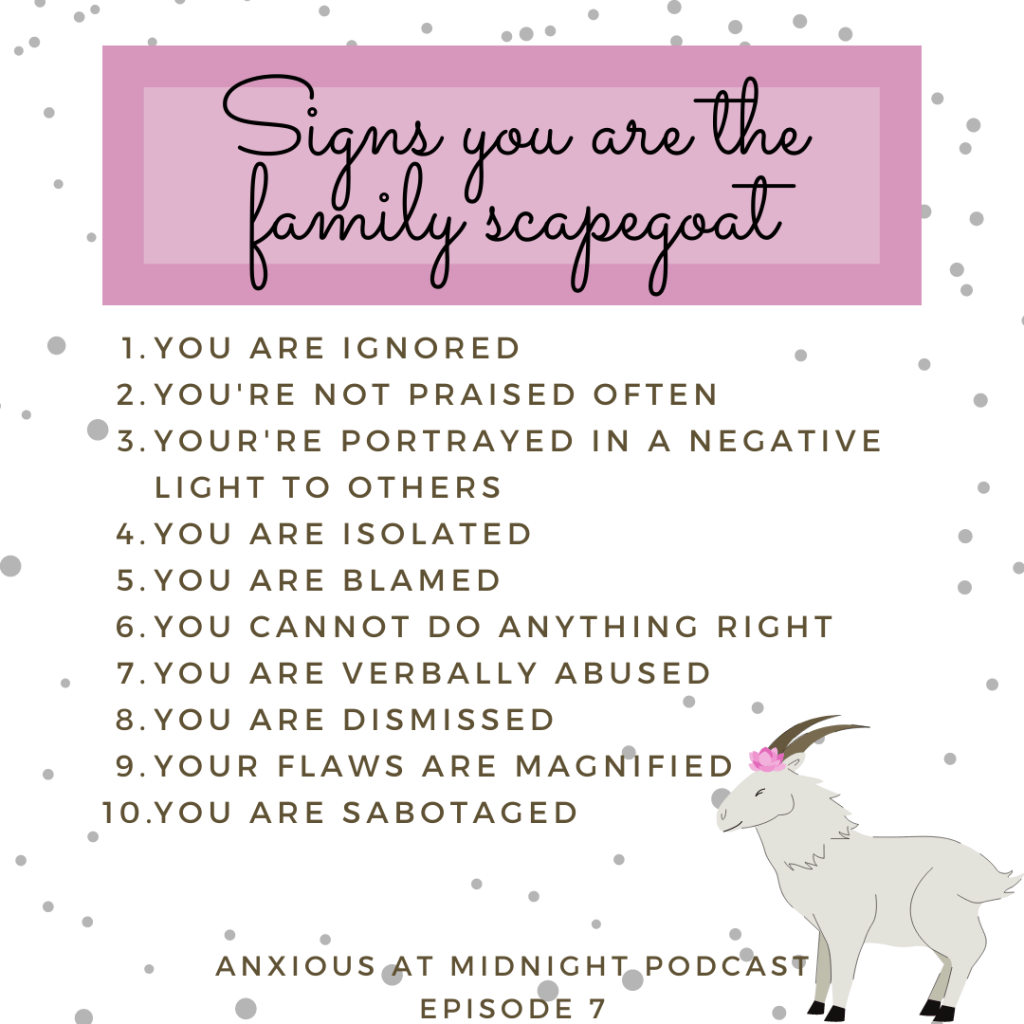
You are ignored
No one wants to hear what you have to say because you are usually the most sensitive and frequently the whistleblower on obvious dysfunction. This leads to them being uncomfortable and they prefer to freeze you out. When speaking the truth you find your family trying to discredit you. They go as far as humiliation because they are unable to accept the truth.
You’re not praised often
Healthy families are proud of other achievements. Not if you’re the scapegoat. Often they are dismissed or belittled. Children will often grow up to believe their families narratives and end up with a lifetime of low self esteem and crippling self doubt.
You are portrayed in a negative light to others
Your character is publicly attacked every chance they get. Your family wants to convince others of your worthlessness so they do not have to take responsibility for the dysfunction or for them to be “on your side”. People usually only hear about your flaws and failures, not your positive qualities or success.
You are isolated from others
They do not want you to receive support or encouragement from outside the family. They try to isolate you from friends and loved ones. This can include separating you emotionally by causing conflict or spreading rumors. They might attack the character of your friends to make it less likely that you will seek their support. Powerlessness is the end goal.
The flaws of others are projected onto you (accusations)
Blamed for the behavior your abuser is actively engaged in. Mom has a bad day, and she forgets to take your sibling to the doctor. Instead of admitting forgetfulness, she tells you that you are lazy, disorganized and do not remember to do anything.
You are blamed
You cannot do anything right.
You are verbally abused
Often wearing every negative adjective (lazy, stupid, irresponsible, etc.)
You are labeled
The scapegoat has trained the entire family how to treat you. When labeled the base one, you become fair game for everyone else.
You are dismissed
Rarely rewarded for good behavior, usually betlitted and ignored.
Your flaws and mistakes are magnified
I told you so… your family is happy to share anything negative about you. When you fulfil the negative actions they assign to you they are affirmed.
You are sabotaged
Normal developmental milestones may be ignored in your household. Often you may feel defeated.
“The Lure”
Oddly, as bad as they claim you were, if you manage to escape their control, they will likely attempt to lure you back in with emotional manipulation. They might start with a guilt-inducing angry rant before evolving into a softer, more supportive approach, playing on your desire for their approval. This might be followed by a fictional recounting of history — when they were loving, supportive and always well-intended. They will try to convince you and everyone else that their unfair treatment of you was a figment of your imagination. But you know better…you were there.
“Script flip”
If these attempts don’t reel you in, prepare for the level 10, code red, frantic fire drill as they embark upon a rage induced campaign of unprecedented petty proportions. Watch as they go hard to convince everyone in their realm of influence that you’re crazy. Stand back as they frantically use every tool in their kit to assassinate your character. Marvel as they cast themselves as victim and magically spin you as the troubled one. Because they are incapable of owning their own guilt, anger and pain, they have to manipulate and project their insecurities outside of themselves. This is precisely why they needed a scapegoat to begin with.
Overview:
It is very common for scapegoats to be blamed for the behavior of other family members. Sometimes it is even blatantly obvious that it is ridiculous to see, yet the scapegoater sees nothing wrong with it. Your family will make it clear what flaws you have in your character. Keep in mind that this process is largely an unconscious process where the family displaces their own collective psychological difficulties and complexities onto a specific family member. This does not mean that the rejectings, humiliating, blaming and shaming are unconscious, the projection process fueling the scapegoating of the family member is unconsciously fueled by multigenerational trauma.
The impact on a child can be detrimental to their mental health and emotional well being for a lifetime. When a child is a scapegoat, their inherent worth, goodness and loveableness are ignored. Insults, bullying, neglect and abuse are deemed appropriate for them instead.
How they are chosen:
No real formula to how they are chosen, it is completely random. Lame ass reasons like birth order, gender, looks, or intellect. Favorites or golden children may be the only boy.. The youngest – like this bitch ass hoe sitting with me recording this.
Scapegoating is rooted in dysfunction, a child who may be sensitive, inquisitive, attractive or smart may seem like a threat and scapegoated by a parent who lacks these qualities. A Narcissistic parent might prefer a child that brings the most glory, and scapegoat the shithead who does not boast the family image.
This can sometimes be because children resemble the parents’ ex partner, maybe they are step kids. Regardless IT IS NEVER THE CHILD’S FAULT. It is never about the child’s inherent worth as a human being.
This role can be rotated. This indicates just how troubled parents are. They may have been raised in dysfunctional families where the children were scapegoats and others were golden children. Maybe they have a personality disorder such as narcissistic personality disorder or borderline disorder. This can lead them to idealize or devalue people, often thinking in black and white.
Effects:
As anyone could guess, scapegoating your child seriously fucks up their shit. Basically you are depriving the child from love and being singled out as the “bad one”. Often overlooking their positive qualities. I can tell you from personal fucking experience that this sets your child up for a lifetime of emotional and psycological distress. Often that child will enter into abusive relationships and working environments. This is because they will grow up thinking that it is normal for people to abuse them.
Gaslighting… That shit is fucked up first of all. Gaslighting makes it challenging for the abused to set boundaries and recognize when someone is crossing their boundaries. A child who is scapegoated has been told their whole lives that they are too sensitive or that there was no abuse. Often the parents will say that the parents are all treated the same while showing blatant favoritism and mentally or physically harming the scapegoated child.
These children internalize the harmful messages which result in self – sabotage or self harm. This ranges from neglecting self-care and not doing well in school to physically harming themselves or engaging in risky behavior. This often leads the child to earning their title as the scapegoat. They may excel in other areas of life. They will still be drawn to the abusive behavior that harms their self care.
Being a scapegoat lonely and heartbreaking for a child to experience. Scapegoats are often driven to leave the family because of the maltreatment they receive, while the golden child remains enmeshed in the harmful family system. This is because this abusive treatment can give the child the ability to see a toxic family for what it is. This results in distancing himself and getting help to recover. Usually, they are the ones who chose to end the generation cycle of abuse. They vow to never treat their children or to always be supportive for their children.
As an adult, the child will bear the burden of recovering from a childhood full of bullying, put downs, unequal treatment and abuse. They did not grow up in a safe stable home where they had the unconditional love of their parents (or caregivers). These children are usually singled out and pitted against their siblings and other family members.
Perhaps the most troubling effect is that family scapegoating abuse leads to complex trauma. A victim may have generalized anxiety disorder, major depressive disorder, dissociative identity order with psychosis, ADHD, OCD, Agoraphobia, BPD or an attachment disorder. Even worse, they may have complex post traumatic stress disorder. Rejecting, shaming and non-nurturing, harmful and abusive environments has contributed to the C-PTSD – aka complete trauma disorder.
Healing:
This can take a lifetime. It is important to consult someone who specializes in dysfunctional families and childhood trauma. You can also read books and do your own research. Prioritize your mental health. If you cannot go no-contact, you can go low contact. People will try to convince you to remain in contact with your toxic family. Some people do not understand the psychological toll that this takes on a person. A lot of times the parents’ public persona is very convincing. You know what is best for you, you were there for the abuse, not them. Low contact occurs when you put firm boundaries of the types of contact they are willing to take. Maybe only through text, email or a phone call. Some maybe limit the in person meetings to holidays, weddings, graduations, etc. It is up to you. Find a support system… first.
Remember that as hurtful and damaging as this is, your perpetrator was only acting out of their dysfunction. They too were likely tormented by their own feelings of inadequacy.
How To Break Free, Heal and Recover From Scapegoating
Understand that what you have come to believe about yourself as family’s Scapegoat – i.e. that you are bad, weird, inadequate or defective – is not the truth. In fact it’s likely a lie that was created to prevent family members from acknowledging their own troubles, thereby avoiding taking responsibility for both their behavior and the need to change.
Locate and trust your ‘Inner Owl’ – that wise part of you that knows you have been mistreated and will no longer willingly allow this abuse from others or yourself.
Recognize that feelings of shame, guilt and self blame belong to the perpetrators, not you as a target. You are simply a dumping ground for their bad feelings. To change this, you need to start standing up to the notion that you are at fault. You will likely have to begin with yourself, learning to question and reject seeing yourself as ‘bad’.
Get to know your true self. Identify exceptions to the negative stereotype you have been saddled with. In other words, pinpoint what is good, likeable or at least adequate about you – your character, values, actions, etc. Write down your good traits – you will need to be reminded of this alternate universe, which is the truth about you, especially if you start to fall back into the habit of feeling bad about yourself again. Understand that getting better – and feeling better – is a learning curve, and you may slip a few times before you gain solid footing
Figure out what you might be doing – consciously or unconsciously – that gives scapegoaters the idea that it’s OK to abuse you. Determine how to change any behavior that draws you into the Victim role.
Stop trying to win the favor of abusive and uncaring family members, co-workers or ‘friends’. Anyone who engages in this type of inappropriate behavior has personality problems, especially a parent who did not love their child.
Don’t expect abusive family members to apologize or make amends. They will likely blame you more if you attempt to hold them accountable.
Start asserting your right to be treated respectfully with family and other people who try and abuse you. E.G., “The way you just spoke to me now is not acceptable, and I never want to be talked to like that again”, or “If you want to have a relationship with me, you will stop the angry outbursts, name calling, accusations, etc.” Know that you may not be heard or respected by aggressive or disturbed people. The point is that you hear and respect yourself! Don’t do this until you are ready to follow through with your commitment to yourself.
Accept that you may never have a healthy relationship with your scapegoater(s). This may involve limited or no contact with those who are determined to continue to abuse you. You may experience feelings of grief. Work through the painful feelings, and get support if needed. This pain is much less harmful than continuing to allow yourself to be abused by anyone.
Get in the habit of treating yourself with kindness, caring, compassion, appreciation and acceptance. Practice viewing yourself as a person of worth and lovability. This will likely feel weird at first as it is unfamiliar. But even though it is unfamiliar, treating yourself in a loving manner is never wrong.
Understand that it will take time to learn how to love and appreciate yourself. You have been trained to be overly self critical and may believe you are defective. Be patient as this false image gradually crumbles. Get counseling to help you overcome this painful legacy, and find your true self – the strong, valuable person you are meant to be.
Practice what you preach with others… Break the cycle
Important note:
But really… if you find yourself treating your child in any of the ways listed above. Please seek help. This is an irrevocable action that can devastate a child’s life. I am just starting to realize this behavior and I have a long way to go to heal. It has been a painful process. It takes so much energy and hard work. Please be the one who stops the generational abuse.
And if you are the victim. Know, you are not alone in this. There is nothing wrong with you.
New Therapist
Sometimes we need a new therapist. This can be for several reasons:
- Initially not the right fit
- Can’t help you with a specific problem in this stage of your life
- Sometimes you just need change
- Unsatisfied
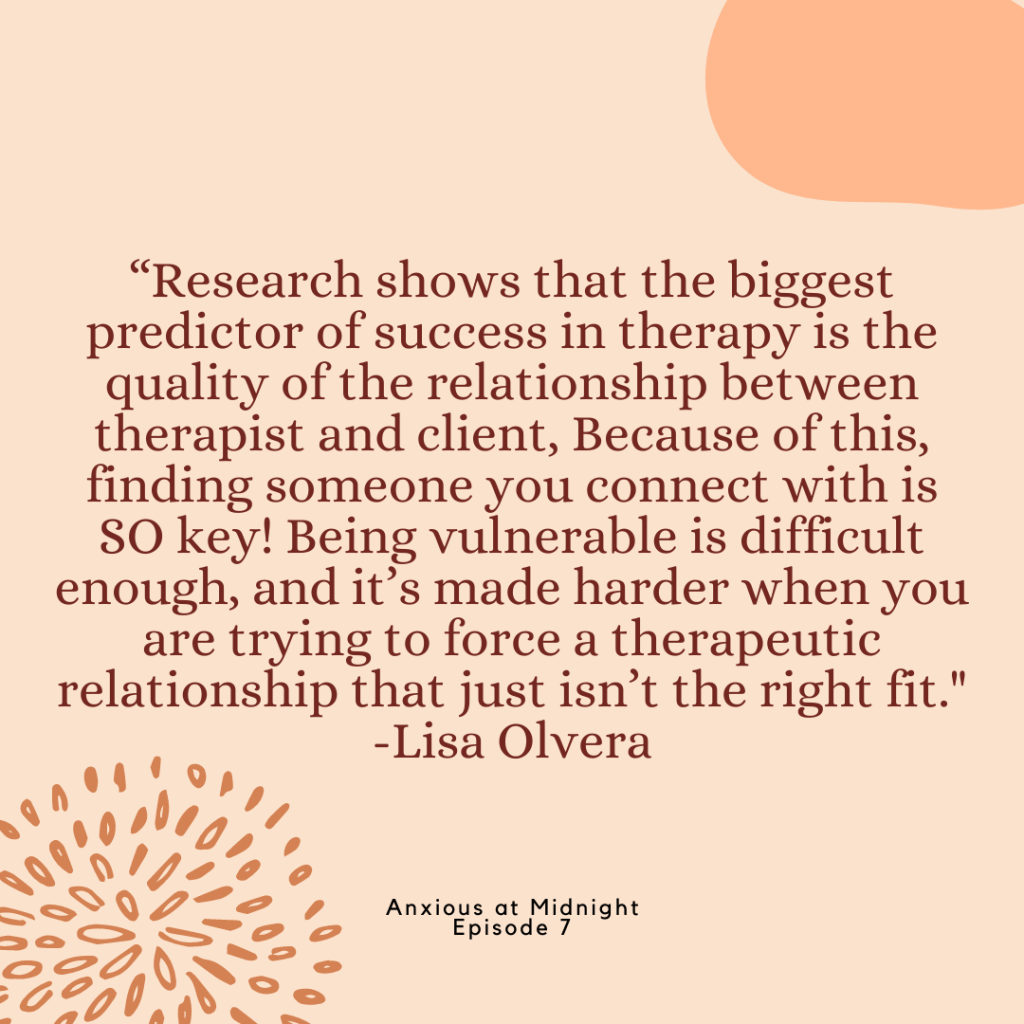
Whatever it is, do not give up looking. Therapy can lead to big results. Lisa Olvera, a licensed marriage and family therapist, says that “Research shows that the biggest predictor of success in therapy is the quality of the relationship between therapist and client, Because of this, finding someone you connect with is SO key! Being vulnerable is difficult enough, and it’s made harder when you are trying to force a therapeutic relationship that just isn’t the right fit.” So keep looking till you find the perfect fit.
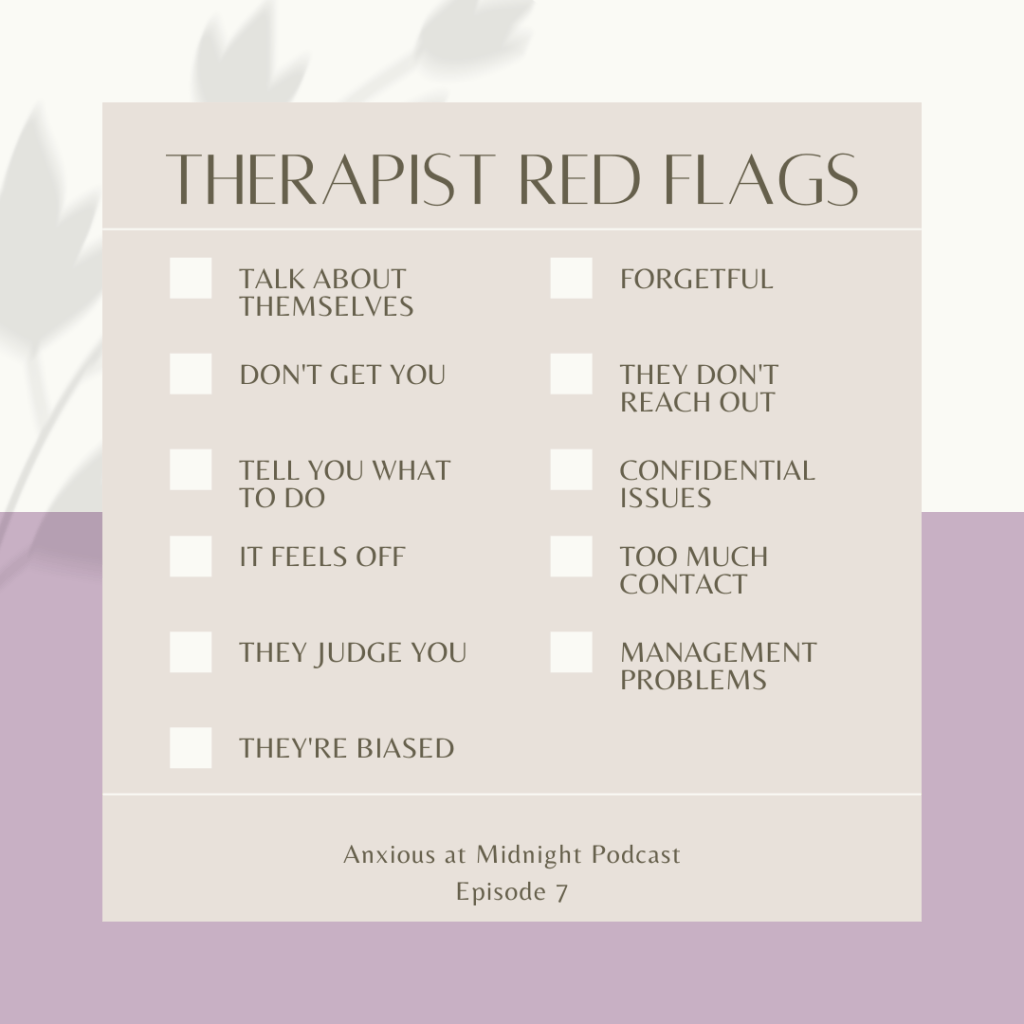
Here are some big red flags to watch for as you look for a new therapist:
- They talk about themselves
- They don’t get you
- They tell you what to do
- It feels off
- They judge you
- They’re biased
- They forget things you tell them
- They don’t say anything if you miss an appointment
- Confidentiality Problems
- Too much contact
- Management problems
If you are still with your current therapist and wondering if it is time to move on, here are some questions to ask yourself:
Are you comfortable with your new therapist?
Sometimes you just do not click with a person and when it is your therapist that you do not click with, it can be very difficult to share things with them. Remember, at first it may be uncomfortable so do not give up yet unless you see the red flags above
Are you making progress?
Therapy is a very long process in some cases and that progress can be difficult to measure. Here are some questions to assess that progress:
- Does your therapist have plans or goals?
- Does your therapist ask about your progress?
- Does your therapist use evidence-based interventions?
Do they provide an empathetic environment?
You should be able to share things without a cold response.
Does your therapist become emotionally reactive when discussing challenging issues?
Your therapist should be able to remain calm no matter how difficult the topic is.
Do you feel like your therapist is listening to you?
Should show signs of active listening.
Do you feel your treatment is progressing?
Progress and change time but you and your therapist should have discussed a treatment plan and regularly address it to ensure you are moving in the right direction.
Does your therapist push their values onto you?
You are your own person and therapy should not be used to change your personality.
Does your therapist encourage you to blame your problems on other people?
Therapists should be encouraging you to look at your role in the problems you are experiencing where appropriate to ensure your growth.
Do you feel like the advice you are receiving is right for you?
Is your therapist reliable?
Does your therapist have the right experience to treat you?
Most therapists specialize in specific areas of psychology which can further help you if you know the root of your problems.
Is it you?
Maybe you are resisting change and further discussions with your therapist may help you in your decision.
If you do decide to move on from your therapist here are some tips:
- Discuss it with your therapist if you are comfortable
- They may be able to guide you and make suggestions
- Use the experience to determine what you are looking for
- Arrange record transfers
Disclaimer
This podcast includes explicit content, we discuss triggering material and are not mental health professionals. If you need immediate help please call the suicide hotline at 800-273-8255.
- Episode 8: It’s an Empty Chair
- Episode 7: As soon as this is over, it’s on.
- Episode 6: Low Pain Tolerance
- Episode 5: A Savage Bitch
- Episode 4: Small Enough?
Sources
https://www.verywellmind.com/what-does-it-mean-to-be-the-family-scapegoat-5187038
https://www.pacesconnection.com/blog/5-critical-things-to-know-about-family-scapegoating-abuse-fsa
https://glynissherwood.com/12-steps-for-family-scapegoat-healing/
https://www.bustle.com/p/8-signs-its-time-to-get-a-new-therapist-9839352
 Anxious at Midnight Podcast